
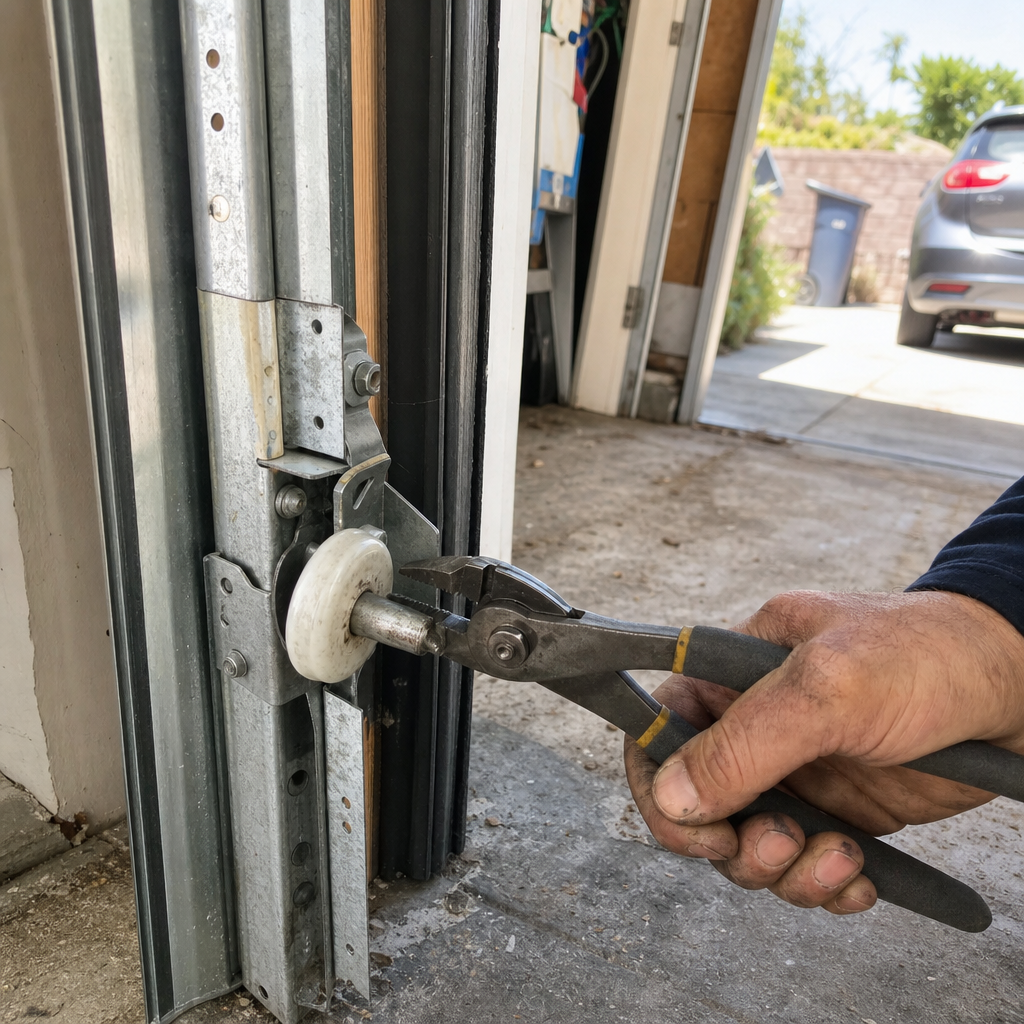
LiftMaster Weather Seal Replacement: The California Owner’s Guide
LiftMaster weather seal replacement in California typically runs $150-$600 installed, depending on whether we’re swapping a bottom seal, threshold seal, or full perimeter kit. We stock LiftMaster-compatible seals for the most common residential opener-and-door pairings and can usually match your part same day. Most owners figure out something’s wrong when they spot daylight under the door, feel a draft they didn’t used to, or notice the garage floor staying damp long after rain.
Which LiftMaster Models This Applies To
LiftMaster doesn’t manufacture garage door panels themselves, they build openers, but their branded weather seal kits are spec’d for doors commonly paired with their systems. You’ll find them on steel raised-panel doors from the 1990s through current Elite Series installations, typically in widths from 8 to 18 feet. The critical match isn’t the opener model, it’s the door’s bottom retainer type: T-style, bead-style, or bulb-style channel. Grab a flashlight and check the metal track along the door bottom. If it’s a single T-shaped slot, you need T-bulb seal. If it’s a wider channel with a groove, that’s bulb-style. Mix those up and the seal either won’t seat or it’ll tear out in the first month.
We carry OEM LiftMaster seal kits and quality aftermarket equivalents from DURA-LIFT and Clopay’s seal line. Aftermarket works fine for most California garages, but if your door is still under a LiftMaster system warranty, OEM keeps that intact. Dale Okonkwo checks the retainer type on every seal call - he’s seen too many homeowners order the right brand, wrong profile, and end up with a gap that lets in Santa Ana dust.
Signs Your LiftMaster Weather Seal Replacement Is Failing
- Daylight visible under the closed door. The seal has compressed past recovery or cracked along its contact edge. In California’s dry inland valleys, UV exposure hardens rubber faster than coastal climates, so a five-year-old seal here might look ten years old elsewhere.
- Water pooling on the garage floor after light rain. The seal’s no longer making continuous contact, often because it’s warped or the retainer channel has bent slightly from a door impact. Water intrusion rusts bottom brackets and rots any wood trim nearby.
- Unusual draft or temperature swing in the garage. A failing seal breaks the thermal envelope. If your attached garage suddenly feels like the outside, the seal’s the first thing to check before blaming the door’s insulation value.
- Pests or debris slipping under the door. Mice need less gap than you’d think. A compressed or chewed seal creates an entry highway, especially in older California neighborhoods where garages back against hillside brush.
- Seal hanging loose or dragging on the floor. The retainer clips have corroded or the seal itself has torn free from its channel. This usually happens after someone manually forces the door with the opener disconnected, stressing the bottom assembly.
Replacement Cost & What’s Included
| Service | Price Range (California) |
|---|---|
| Bottom seal replacement (standard T-style or bulb-style) | $150-$280 |
| Bottom seal + retainer channel replacement | $220-$400 |
| Full perimeter weather seal kit (bottom + sides + top) | $350-$600 |
The range depends on door width, seal type, and whether the retainer hardware is reusable. We quote parts and labor separately before starting - no bundled mystery pricing. Our seal replacements carry a one-year workmanship warranty, and we use EPDM rubber rated for California’s UV exposure, not the cheap PVC that goes brittle in two summers. If the door’s off-balance or the bottom brackets are corroded, we’ll flag that during the seal swap rather than install over a problem.
DIY or Call Us?
Checking the seal type and measuring your door width - that’s safe homeowner territory. A tape measure and five minutes of daylight.
Actually installing the seal is where it gets tricky. The door needs to be fully open and often clamped in place, which puts tension on the spring system. If your opener has a battery backup or wall-mounted jackshaft, there are additional lockout steps. And if the retainer channel is bent or the bottom brackets are seized, you’re now working near the cable attachment points where a slip means a loaded spring or flying hardware.
We don’t upsell a full door when a seal will fix it. But we also don’t recommend wrestling a 16-foot steel door by yourself to save a service call. If the door isn’t moving right, something isn’t set right - and that’s always a fixable problem. Call (855) 574-1819 and we’ll sort out whether you need a seal, a retainer, or just the door rebalanced so the new seal actually contacts the floor evenly.
FAQs
Expect 5-8 years on the coast, 3-5 years inland where UV and heat cycling are harsher. EPDM rubber holds up better than PVC in our climate. If your seal is failing before year three, the door may be out of alignment and wearing one side faster. Call (855) 574-1819 for an exact quote - estimates are free.
Not in any way that lasts. Once rubber is cracked, compressed, or UV-degraded, adhesive patches and DIY fillers fail within weeks. Replacement is the only durable fix. Call (855) 574-1819 for an exact quote - estimates are free.
Most bottom seal swaps take 45-90 minutes on site, assuming the retainer channel is sound. Full perimeter jobs run 2-3 hours. We stock seals for standard widths and can match most retainer profiles same visit. Call (855) 574-1819 for an exact quote - estimates are free.
We stock T-style, bulb-style, and threshold seals for 8, 9, 10, and 16-foot doors on every truck, plus adapters for odd retainer sizes. If you have a custom width or an older bead-style channel, we can usually source it within 24 hours. Call (855) 574-1819 for an exact quote - estimates are free.
Written by Dale Okonkwo, Owner & Lead Technician, Mainspring Garage Door Co. of California at Mainspring Garage Door Co. of California, serving California and nearby areas.